Finding the Best Stock Screener for Swing Trading in 2026
Discover the best stock screener for swing trading. We compare top tools with actionable workflows to help you find high-momentum stocks consistently.
Finding the best stock screener for swing trading means ditching the outdated tools of the past. By 2026, the game has changed. Top-tier platforms, like OpenSwingTrading, are built specifically to spot momentum in markets dominated by algorithms—a job where basic, free screeners just can't keep up anymore. Real success comes from a tool that understands market context, not just isolated company data, enabling you to consistently identify high-probability setups and build a profitable, repeatable trading process.
Why Generic Screeners Fail in Today's Market
In the algorithm-driven markets of 2026, leaning on generic, free screeners is a losing game for any serious swing trader. The speed and volume of trading today have made finding high-probability setups by hand a near-impossible task.
This new reality makes a specialized screener an essential part of your toolkit, not just a nice-to-have. It’s all about getting away from old-school filters like P/E ratios and embracing platforms that analyze what actually drives price moves over several days: market context, relative strength, and the flow of institutional money. This actionable insight saves hours of manual research and positions you to catch significant moves by focusing only on the strongest market leaders.
The Challenge of Modern Markets
Picture this: it’s 2026, and algorithms drive over 80% of daily volume while new retail traders jump in using AI-powered apps. Trying to manually sift through 5,000+ stocks for a decent swing setup is like trying to find a needle in a haystack—if the haystack were also made of lightning. This is exactly where modern stock screeners, like the engine behind platforms such as OpenSwingTrading, really prove their worth. They rank over 4,500 equities every single day based on volatility-adjusted relative strength. You can learn more about how modern scanners handle this volume and complexity and see how they help traders adapt.
A generic screener shows you what has already happened. A specialized swing trading screener helps you anticipate what is likely to happen next by tracking the footprints of institutional capital.
Beyond Basic Filters
Good swing trading is all about finding stocks that are outperforming the market right now. This is where basic screeners fall flat, because they simply lack the tools for true contextual analysis.
- Relative Strength: Most can't measure a stock's performance against its peers or the broader market in a sophisticated, volatility-adjusted way. This is a critical blind spot.
- Sector Analysis: Pinpointing which sectors are attracting big money is a core part of the strategy, but it’s a feature you'll rarely find in free tools.
- Market Breadth: Gauging the overall health of the market is step one for managing risk, yet most generic screeners operate in a total vacuum.
Platforms like OpenSwingTrading are designed for this new environment. They give you the depth needed to slice through the noise, letting you focus only on the strongest stocks in the healthiest parts of the market. It’s a more professional, data-driven way to approach your trading.
The Swing Trader's Screener Checklist: What Really Matters
Let's cut through the noise. To consistently find and profit from multi-day price moves in 2026, you need a stock screener built for the job. Forget the generic filters like P/E ratios or market cap that you find on free finance sites—they’re almost useless for identifying the kind of momentum we’re after.
What truly matters is spotting institutional footprints and powerful momentum before the big move gets underway. A dedicated swing trading screener is your best tool for this. It acts as a filter, clearing away all the market chatter and leaving you with a small, manageable list of high-probability candidates. This actionable approach not only saves you hours of manual work but, more importantly, dramatically improves the quality of your trade ideas, giving you a clear edge.
Finding Momentum: The Core Features
The best screeners for swing traders are laser-focused on measuring performance and relative strength. When you're evaluating a tool, these are the non-negotiables:
- Volatility-Adjusted Relative Strength: I'm not talking about the standard RSI indicator. This is a far more powerful metric that compares a stock’s performance against a benchmark, like the S&P 500, while also accounting for its volatility. It answers the single most important question: "Which stocks are exhibiting true market leadership right now?"
- Advanced Volume Analysis: Big institutions can't hide their activity. They leave massive footprints in the volume data. Your screener absolutely must be able to find stocks trading on unusually high volume—for instance, 150% or more above their 20-day average. This is a classic sign that something is brewing.
- Sector and Industry Group Strength: Stocks don't move in a vacuum; they travel in packs. The ability to see which sectors and industry groups are attracting the most capital is a massive edge. It ensures you’re fishing in the right pond, where the big money is flowing and the odds are stacked in your favor.
Reading the Market's Health
Even a perfect A+ stock setup is likely to fail if the overall market is crumbling. This is why a top-tier screener needs to give you a clear, unbiased picture of market health.
A great swing trading screener does more than just find individual stocks—it provides crucial market context. Knowing if you’re operating in a healthy, bullish environment or a choppy, bearish one is the bedrock of smart risk management.
This is where comprehensive market breadth indicators come in. Metrics like the percentage of stocks trading above their 50-day moving average or the ratio of new 52-week highs to lows give you an instant read on the market's internal strength. This data tells you when to be aggressive and when to step on the brakes, protecting your capital from unnecessary drawdowns.
Comparing the Top Stock Screeners for Swing Trading
Picking the right screener goes way beyond a feature checklist. To really understand how these tools work, you have to see them in action. Let's compare three of the top platforms for 2026—Finviz, TradingView, and OpenSwingTrading—by tackling a classic swing trading challenge: finding a high-momentum stock coiled for a breakout in a hot sector.
This hands-on approach cuts through the marketing noise. Instead of asking, "What can it do?" we'll ask, "How does this help me find a quality trade?" The answers reveal everything you need to know.
The Scenario: Finding a Breakout Candidate
Let's say the technology sector has been on a tear for the past two weeks. Our mission is to pinpoint a stock within that sector that’s building up pressure for a potential breakout. This isn't just about finding a stock above a moving average; it’s about finding a true leader with the right context, relative strength, and timing.
A solid swing trade setup relies on three core pillars: Momentum, Volume, and Strength. You need all three working together to find those high-probability opportunities.
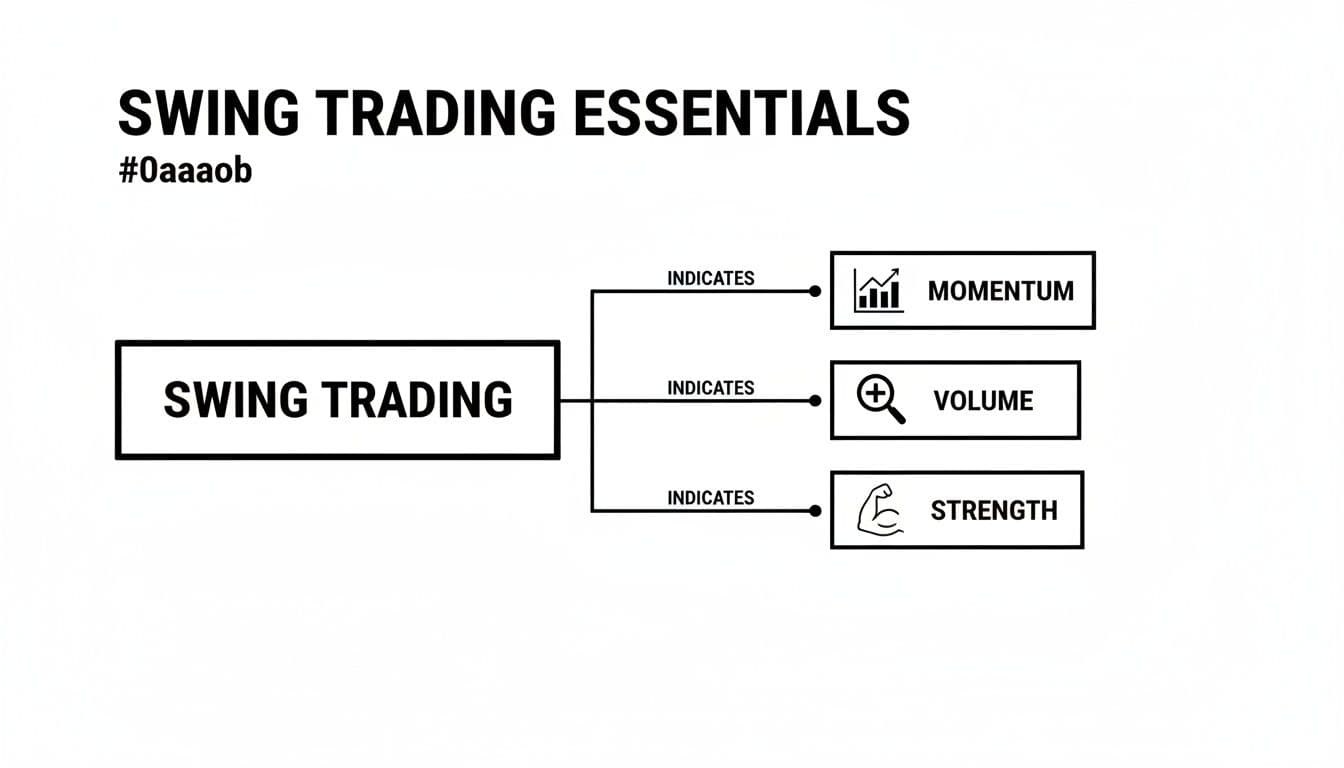
With these essentials in mind, let’s see how each platform handles the task.
Finviz: A Great Starting Point
Finviz is where many traders get their start, and for good reason—it’s a fantastic free tool. For our scenario, we could quickly filter for the "Technology" sector, select stocks trading above their 50-day moving average, and add a volume filter for anything over 500K shares a day.
In seconds, you have a list of candidates. But that's where the journey with Finviz ends. It tells you what stocks meet your basic criteria, but it offers almost no context on which of them are the actual leaders. You can't rank them by true relative strength or see how the tech sector stacks up against others. It’s a powerful first-pass filter, but the heavy lifting of prioritizing the best setups is all on you.
TradingView: The Technical Powerhouse
TradingView takes things to another level. Its screener is woven directly into its world-class charting software, giving you access to hundreds of technical filters. To find our breakout candidate, we could build a much more precise scan:
- Sector: Technology
- Price: Above the 50-day and 200-day moving averages
- Average True Range (ATR): Greater than 2% (to find stocks with some volatility)
- RSI(14): Between 50 and 70 (showing strength without being overbought)
This produces a much cleaner list than Finviz. The real magic is being able to instantly click through the charts for each result and visually confirm the patterns. The downside? The analysis still happens in a vacuum. TradingView is brilliant at finding stocks that fit a specific technical profile, but it doesn't help you confirm if the broader market or sector is even healthy enough to support a breakout in the first place.
The critical differentiator is the starting point of the analysis. TradingView helps you analyze a single stock in incredible detail, while OpenSwingTrading helps you first understand the market's health to determine if you should even be looking for long setups at all.
OpenSwingTrading: A Top-Down Strategic Approach
OpenSwingTrading flips the entire process on its head. It isn't just a screener; it's a structured market analysis workflow. You don't start by looking for stocks. You start with the big picture.
First, you'd check its market breadth indicators. These would instantly confirm whether the overall market is in a healthy uptrend, giving you the green light to even consider looking for new long trades. This is actionable insight at its best—it prevents you from taking on unnecessary risk when market conditions are unfavorable.
Next, you move to the sector and industry group rankings. Here, you'd see objective, data-driven proof that the Technology sector is a top performer based on volatility-adjusted relative strength. This step is a game-changer—it validates your thesis with hard data before you waste a second looking at individual charts.
Only then do you dive into the stock lists, where over 4,500 equities are ranked daily. You can filter by the Technology sector and immediately see the top 10-20 stocks sorted by their relative strength. What you get is a curated list of the market's true leaders—the very stocks with the highest probability of a successful breakout. Your job is now simplified: take this small, high-quality list to a platform like TradingView for final chart analysis and trade planning. It turns a frustrating search into a focused mission.
To put it all together, here’s a direct comparison of the features that matter most to a swing trader.
Swing Trading Screener Feature Comparison for 2026
The table below breaks down how each platform delivers on the core needs of a swing trader. It’s not just about what features exist, but how they’re implemented to help you find better trades, faster.
| Feature | Finviz | TradingView | OpenSwingTrading |
|---|---|---|---|
| Market Health Analysis | Limited to basic index charts. | Relies on manual analysis of charts and indices. | Core feature. Provides dedicated market breadth indicators (Bullish Percent Index, etc.). |
| Sector/Industry Strength | Basic sector performance maps. No relative strength ranking. | No built-in quantitative ranking. Requires manual comparison. | Daily rankings of all sectors and industry groups by volatility-adjusted relative strength. |
| Stock Ranking | Basic sorting by P/E, volume, etc. No relative strength metric. | Can sort by technical indicators, but lacks a holistic strength score. | Ranks 4,500+ stocks by a proprietary, volatility-adjusted relative strength score. |
| Ideal Use Case | Quick, free, fundamental, and basic technical scans. | In-depth technical analysis and visual pattern recognition on a known list. | Top-down analysis to find the strongest market areas and leading stocks within them. |
| Workflow Focus | Bottom-up (find individual stocks). | Bottom-up (analyze individual charts). | Top-down (market -> sector -> stock). |
As you can see, the right tool really depends on your trading philosophy. If you just need a quick filter, Finviz works. If you live on your charts, TradingView is indispensable. But if you want a strategic, data-driven process that puts the odds in your favor before you start looking at individual stocks, OpenSwingTrading’s top-down approach is built specifically for that purpose.
How OpenSwingTrading Gives You an Edge
So, how does OpenSwingTrading actually help you find better trades? It’s all about creating a clear, repeatable process that cuts through the noise. Instead of just dumping a bunch of data on you, the platform guides you through a disciplined, top-down analysis that puts you in sync with the market's real movers.
This isn’t just about finding pretty charts. It’s about making sure your capital is positioned in the strongest stocks, within the healthiest sectors, at the right time. The best part? The whole routine is designed to take just 15 minutes after the market closes, so you can make objective decisions without getting caught up in the emotional rollercoaster of live trading. This structured workflow is a core benefit, fostering discipline and consistency—two traits essential for long-term trading success.
A Simple Three-Step Workflow for Finding Winners
The real magic of OpenSwingTrading is its structured, three-step workflow. This isn’t just a random assortment of features; it's a clear path from market-wide analysis down to a specific, high-potential stock.
- Check the Market's Pulse: The very first step is to look at the market breadth indicators. Think of it as a simple "red light, green light" system. This keeps you from trying to swim against a powerful market tide, which is one of the fastest ways to lose money.
- Find the Hottest Sectors: Next, you look at the daily rankings for sectors and industry groups. This is where you see exactly where the big money is flowing. The rankings are based on volatility-adjusted relative strength, so you know you're fishing in the most profitable ponds.
- Pinpoint the Strongest Stocks: With the top sectors identified, you can finally drill down to individual stocks. The platform ranks over 4,500 equities every single day, handing you a curated list of the market’s true leaders.
Following this sequence turns the often-chaotic search for trade ideas into a systematic, almost effortless routine. It's built to sharpen your pre-charting work, giving you a solid foundation before you even open up your charting software like TradingView.
From Raw Data to a Powerful Watchlist
The daily post-close data is where this process really comes to life. Let’s say you see that the "Semiconductors" industry group is ranked #1 in relative strength. With one click, you can see the top five stocks leading that group. Just like that, you have a handful of prime candidates poised for a potential breakout.
This workflow tackles a huge problem that plagues most traders. It’s a harsh truth, but studies show that up to 90% of swing traders barely break even or lose money year after year. Why? They often make emotional trades without a solid, repeatable system. A dedicated screener changes that entirely, giving disciplined traders a real shot at consistent profits. OpenSwingTrading was built from the ground up for this exact purpose, scanning thousands of stocks daily for the momentum signatures that often precede big moves. You can discover more insights on how professional traders use data to their advantage.
OpenSwingTrading isn't here to replace your charting software. It’s the critical front-end to your entire process. It answers the question, "What should I be looking at?" so you can use your charts to answer, "When should I pull the trigger?"
By narrowing your focus to a small, data-vetted list of market leaders, you dramatically improve the quality of every trade you consider. You’re no longer chasing random tips or alerts. Instead, you're trading with the confidence that comes from a plan backed by objective market data. This is the kind of strategic advantage that defines the best stock screener for swing trading in 2026.
A 15-Minute Daily Workflow for Finding Trades

Look, even the most powerful screener is just a tool. Without a solid, repeatable process, it's just a way to get lost in data. The key to consistent swing trading in 2026 is having a disciplined routine that shields you from intraday noise and keeps emotional decisions at bay.
Here’s a simple, 15-minute post-market workflow I’ve refined over the years, using a platform like OpenSwingTrading. It ensures you start every trading day with a clear head and an objective plan.
The whole point is to cut through the clutter. We’re going to take a universe of thousands of stocks and distill it down to a manageable watchlist of 5-10 high-conviction candidates. By doing this after the market closes, you sidestep the real-time price whipsaws and give yourself the space to think strategically. This disciplined process is a key benefit, helping you build confidence and avoid emotional trading mistakes.
Step 1: Analyze Market Health (5 Minutes)
First things first: what is the market actually doing? Before you even glance at an individual stock, you need to gauge the overall environment. Is the tide with you, or are you about to swim against a nasty rip current?
Spend your first five minutes on the big picture. I use market breadth indicators to get a quick "risk-on" or "risk-off" read. This step isn't optional—it tells me whether I should be hunting for aggressive long setups, playing defense, or just sitting on my hands. This single check provides actionable risk management insight before you even look for a trade.
Step 2: Identify Leading Sectors (5 Minutes)
Once I have a handle on the market’s health, the next five minutes are all about finding where the action is. Stocks rarely move in isolation; they travel in packs. Your job is to find the strongest pack.
This is where I check the daily sector and industry group rankings. I’m looking for groups showing exceptional relative strength, especially when adjusted for volatility. This isn’t about guesswork; it's about seeing precisely where big money is flowing. It’s the difference between fishing in a stocked pond and casting a line into a puddle.
I see so many traders make the same mistake: they find a beautiful chart in a sector that’s an absolute dog. This workflow forces you to lead with strength, making sure your trades are aligned with the market’s most powerful currents.
Step 3: Build a Focused Watchlist (5 Minutes)
In the final five-minute block, it’s time to find the alpha dogs within those leading sectors. Filter the stock rankings down to show only the top 10-20 names in the groups you identified in the last step.
From that pre-qualified list, I’m cherry-picking 5-10 stocks with the cleanest technical patterns. I'm looking for tight consolidations, clear signs of accumulation, or stocks coiling up for a potential breakout.
This small, curated list of tickers is now my focus. I'll import them into a charting platform like TradingView for a closer look and to map out my entry, stop, and target levels. This routine makes finding the best stock screener for swing trading less about the tool itself and more about the process you build around it.
How to Choose the Right Screener for Your Trading Style
The right stock screener is the one that actually fits how you trade. What works perfectly for one person can be a total mismatch for another, so the best choice really comes down to your personal goals and workflow in 2026.
To figure this out, start by thinking about your primary focus. Are you a pure technical analyst who spends all day in the charts, just looking for a tool to flag basic setups? For that, a platform like TradingView Pro is fantastic. It has best-in-class charting tools and a solid screener, even if it lacks some deeper market context. It’s built to help you answer, "How should I trade this?"
On the other hand, if your goal is to find higher-quality opportunities using a more top-down, data-driven approach, a specialized tool like OpenSwingTrading is a much better fit. It was designed from the ground up to answer the most critical question first: "What should I be trading right now?" It gives you that big-picture view of the market, helping you put your money where the institutional players are. This strategic advantage is a massive benefit for any serious swing trader.
Your screener isn't just a tool; it's a fundamental part of your professional trading system. Choosing one that reinforces a disciplined, repeatable process is one of the smartest investments you can make in your trading career.
The only way to know for sure is to try them out yourself. Get your hands on a free trial and see what it feels like to run a structured, post-market routine. You might be surprised by how much clarity and confidence it gives you.
Common Questions from Swing Traders
Navigating the world of screeners brings up a lot of questions, especially with how quickly markets move these days. Here are some of the most common things traders ask when trying to pick the right tool for the job.
Can I Get By With a Free Stock Screener?
Free screeners are a decent place to start, but honestly, they often fall short when you're trying to build a consistent edge. They just don't have the key metrics that matter for serious swing trading, like volatility-adjusted relative strength, deep market breadth data, or a clear view of institutional activity.
If you want to move past inconsistent results and build a truly professional process, you eventually have to invest in a specialized screener. Getting that deeper context is one of the most important steps you can take in 2026. This is an actionable step towards improving your profitability.
How Do I Use a Screener Like OpenSwingTrading With TradingView?
Think of them as two parts of a powerful one-two punch. OpenSwingTrading is for your pre-market "pre-flight check"—it’s where you find the best possible candidates by filtering for market health and true relative strength. You run your 15-minute workflow there to build a small, high-potential watchlist.
Once you have that curated list of tickers, you pop over to TradingView. That's where you do your detailed chart work, pinpointing exact entry and exit points and managing the trade from start to finish. In short, one tells you what to trade, and the other helps you figure out how to trade it.
How Many Stocks Should I Have on My Daily Watchlist?
For most of us, less is definitely more. The whole point of a good screener is to slash through the noise of thousands of stocks and find the handful that truly matter. A focused watchlist of 5 to 15 of the strongest names is pretty much ideal.
This keeps you from getting bogged down by analysis paralysis. It lets you do a proper, thorough review of each setup, which leads to much better trade decisions and helps you put your capital to work on the best opportunities out there.
Sticking to this disciplined approach means you're always trading from a position of strength, armed with a pre-vetted list of the market's real leaders.
Ready to upgrade your trading process with a data-driven workflow? Discover how OpenSwingTrading can help you find high-momentum candidates in just 15 minutes a day. Start your free 7-day trial at https://openswingtrading.com.