Breakout stock watchlist: how it works after the close
An explainer of how an after-close breakout stock watchlist is built and used—follow the end‑of‑day pipeline, understand why the closing auction matters, apply the right data and filters, and translate scores into next‑day triggers and risk plans.
Breakout stock watchlist: how it works after the close
An explainer of how an after-close breakout stock watchlist is built and used—follow the end‑of‑day pipeline, understand why the closing auction matters, apply the right data and filters, and translate scores into next‑day triggers and risk plans.
If you’ve ever built a breakout watchlist at 3:55 p.m., you know the feeling: the “perfect” setup can vanish the next morning, or worse, it only looked clean because of late-day noise.
This explainer walks you through what a disciplined watchlist does after the close—how raw prints get normalized, which breakout metrics actually matter, how filters and scoring separate signal from junk, and how the final list becomes a concrete next-day execution map with defined triggers and risk.
After-close pipeline
Your watchlist is only as good as the boundary you respect after 4:00 pm. The whole pipeline exists to separate “real closes” from “later edits,” so your signals stay reproducible.
Freeze the tape
Most watchlists treat the 4:00 pm ET close as the checkpoint, not the finish line. Late prints, trade corrections, and occasional consolidated feed updates can still change the final OHLCV by a little.
That’s why many breakout scans wait for an “official” end-of-day state, like the first consolidated final bar after the close or a short delay window. It avoids the classic problem where a stock “closed above resistance,” then the final close ticks back under on a correction.
If you can’t replay the same close tomorrow, your watchlist becomes a moving target.
Normalize raw data
Before you scan for breakouts, you clean the inputs that create fake levels and fake volume spikes. Normalization keeps yesterday’s chart compatible with today’s chart.
- Adjust splits and reverse splits
- Apply dividends and special distributions
- Map symbol changes and ticker reuse
- Patch missing bars and stale feeds
- Reconcile corporate action effective dates
Fix the data first, or you’ll “find” breakouts that never happened.
Compute breakout metrics
Once the tape is stable, you compute the signals that describe pressure building and release. Think range contraction, volatility compression, relative volume versus a baseline, and closing strength like “close in top 20% of range.”
Close-to-close metrics usually win for watchlists because they damp intraday noise. A clean close above a level, backed by abnormal volume, is harder to fake than a midday spike.
You’re not predicting tomorrow; you’re measuring today’s proof.
Score and rank
You need one number that turns many signals into a decision. The goal is a repeatable ranking, not a debate every night.
- Assign weights to each metric based on your breakout model.
- Apply hard filters like liquidity, price, and earnings dates.
- Combine metrics into a single composite score.
- Rank candidates and break ties with secondary rules.
- Set cutoffs for inclusion, plus a small “bench” list.
Your cutoff is where analysis stops and execution planning starts.
Why the close matters
The close is where a full day of opinions gets forced into one print. In the closing auction, liquidity concentrates, spreads compress, and big orders stop hiding. That’s why a “breakout at 3:59” and a “breakout on the close” are different events.
Auction microstructure
The closing auction is a scheduled collision of supply and demand, not a rolling negotiation. It pulls in MOC (market-on-close) and LOC (limit-on-close) orders, plus D-imbalances that telegraph buy or sell pressure before the match.
Unlike continuous trading, price can gap within the last minute because participants reprice to get included in the cross. An imbalance update can flip the expected clearing price fast, especially in thinner names.
That final print often reflects urgency and size, not just the last incremental trade. For the mechanics, see the official NYSE auction timelines and imbalance info.
Signal reliability
Close-based breakouts tend to “stick” because the close is where bigger constraints apply. You’re measuring what had to happen, not what briefly happened.
- Institutions benchmark to the close
- Daily charts anchor decisions
- Auction prints reflect real size
- Less intraday whipsaw noise
- Next-day orders reference prior close
If the level holds into the close, it’s usually defended by someone who can reload tomorrow.
Edge cases
Not every close is “pure” information, and some closes are basically mechanical. Index rebalances, quad witching, and large ETF flows can force prints that look like breakouts but aren’t driven by discretionary demand.
News drops near 4:00 can also create one-off spikes, where the auction becomes a reaction chamber. You’ll see a clean close above resistance, then no follow-through because the catalyst was time-bound.
When the close is dominated by a calendar event, treat the breakout like a data point, not a signal.
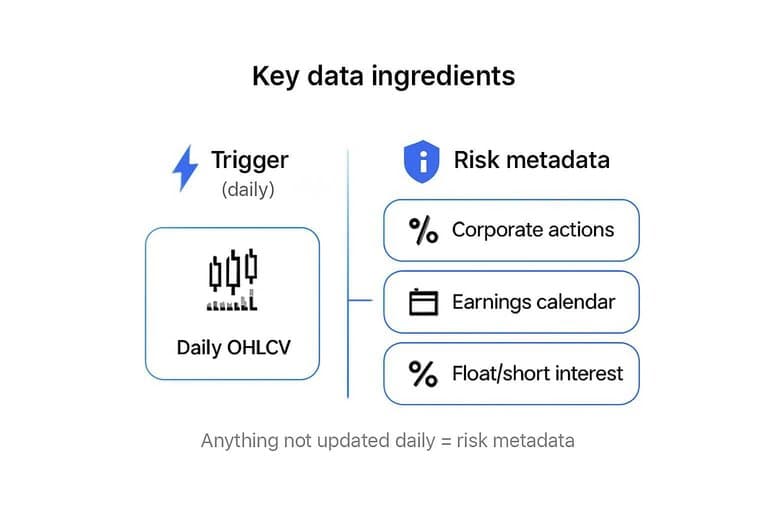
Key data ingredients
After the close, your breakout watchlist is only as good as the inputs feeding it. Use this table to sanity-check each data stream by source, timing, and the mistakes that quietly ruin signals.
| Input | Source | Update time | Common errors | Breakout influence |
|---|---|---|---|---|
| Daily OHLCV | Exchange/NBBO vendor | End-of-day | Bad split adjust | Levels, volume surge |
| Corporate actions | Issuer/CA feed | Next morning | Late splits | False breakouts |
| Earnings calendar | Company/IR/feeds | Weekly changes | Date shifts | Gap risk filter |
| News/symbol changes | News+listing feeds | Intraday+EOD | Ticker mismatch | Universe integrity |
| Float/short interest | Exchange/FINRA | Biweekly/monthly | Stale float | Squeeze probability |
Treat anything not updated daily as “risk metadata,” not a trigger. Your trigger should come from price and volume that actually printed.
Filtering mechanics
Before you score anything, you block the obvious landmines. These gates remove names that look great on paper but trade poorly or behave discontinuously. Think of it as rejecting the “pretty chart, impossible fill” problem before it wastes your attention.
Liquidity gates
You’re trying to avoid breakouts that only work in backtests because the fills are fantasy. Liquidity gates keep your entries and exits realistic when you actually hit the button.
- Set a minimum price (e.g., $5–$10) to reduce microcap noise.
- Require average dollar volume (e.g., $5M–$20M/day) for consistent participation.
- Add a spread proxy (e.g., median intraday range or quoted spread %) to avoid wide markets.
- Fail anything with frequent thin prints, even if volume looks “okay.”
Slippage is a strategy cost, not a rounding error.
Trend structure
Breakouts behave better when the trend is already doing the hard work. You want alignment like price above the 50-day, and the 50 above the 200, because it signals demand persistence.
You also want higher highs and higher lows, plus a visible compression or base. When trend and tightening range agree, the breakout has a reason to follow through.
If the “base” forms under falling averages, it’s usually just a pause before more selling.
Event risk filters
Technical setups assume continuity from one session to the next. Event-driven gaps rewrite the chart overnight.
- Exclude earnings within the next 7–10 trading days
- Exclude known FDA/SEC decisions and major rulings
- Exclude recent halts or repeated volatility pauses
- Exclude low-float “promo” behavior and squeeze-only names
If the next candle can be a 25% gap, your levels stop meaning anything.
Quality overrides
Good systems still allow constrained discretion, because edge is lumpy. You might keep a name that fails one gate if it has exceptional relative strength, a clean multi-week base, and clear leadership in a strong group.
These overrides can be automated too, like “allow lower dollar volume if RS is top decile and spread stays tight.” The point is to document the exception, not to improvise it.
If you can’t write the override rule, you don’t have an override. You have a bias.
Scoring internals
Your watchlist score is a probability proxy for follow-through, not a beauty contest. It rewards signs of steady institutional demand and punishes patterns that snap under pressure. Think “tight and strong” gets points, while “fast and fragile” loses them.
Reward signals
These positives get scored because they show controlled accumulation, not random noise.
- Tight base: compressing range signals patient sponsorship
- High RS: outperforming market shows persistent demand
- Rising volume trend: gradual pickup suggests institutions stepping in
- Close near highs: buyers in control into the bell
- Strong group: leaders cluster where money is flowing
If you see several at once, you’re not seeing luck—you’re seeing bids.
Penalty signals
These negatives get scored because breakouts fail most when entries are stretched or supply is obvious.
- Extended from MAs: mean reversion risk spikes fast
- Wide spreads: volatility hints weak control and stop-run danger
- Overhead supply: prior bagholders sell into strength
- Climax volume: exhaustion often follows the “everyone noticed” day
- Erratic gaps: discontinuous trading breaks clean risk plans
Penalties keep you out of the stuff that works—until it doesn’t.
Weighting logic
Weights follow execution reality: liquidity first, then trend strength, then trigger quality. A perfect pattern that trades like sand still fails, while a liquid leader can absorb churn and keep climbing.
To reduce overfitting, weights stay coarse and monotonic, with a few dominant features and capped contributions. That forces the model to prefer obvious, repeatable edges over “clever” combinations that vanish next quarter.
Threshold behavior
Thresholds turn a score into action so you don’t overtrade your own attention.
- Set a score cutoff that matches your weekly capacity.
- Create tiers (A/B/C) so urgency maps to quality.
- Cap names per sector to avoid one-theme exposure.
- Review cutoffs monthly when volatility regimes change.
Your goal is a small list you can actually stalk, not a spreadsheet trophy. If you want broader market-structure context for why liquidity/spreads matter operationally, see the SEC’s execution-quality disclosure update (Rule 605).
Next-day execution map
Your after-close watchlist is a set of “if-then” statements waiting for live prices. You’re not predicting the open; you’re pre-connecting signals to orders so execution stays boring under pressure.
Define triggers
A trigger is your exact entry condition, written so you can place an order instead of staring at candles. It protects you from buying “one more green tick” that means nothing.
Use clean, repeatable trigger types:
- Buy stop above pivot: Place a stop a few cents above the pivot high.
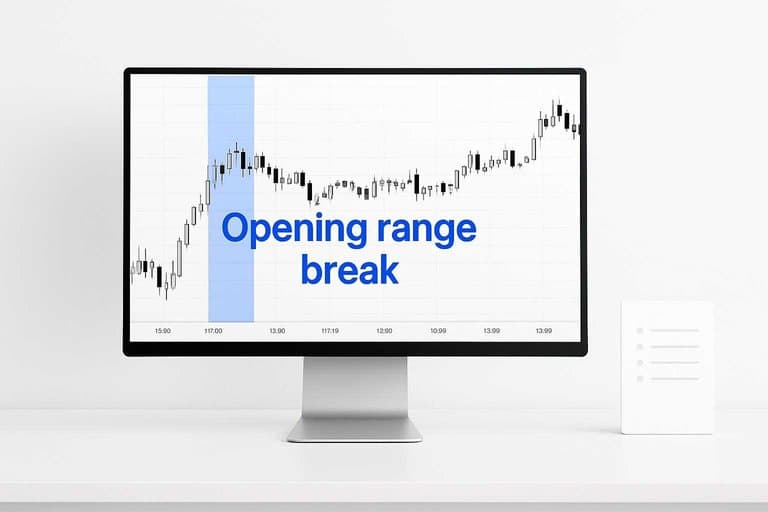
- Opening range break (ORB): Enter only if price clears the first 5–15 minutes.
- Pullback entry: Buy the first controlled retest after the breakout.
If your trigger isn’t an order you can pre-stage, it’s probably just chasing noise.
Plan risk units
Do your risk math before you even think about the perfect entry.
- Choose the invalidation level that proves you’re wrong.
- Compute position size from your fixed $ risk per trade.
- Set the stop type: hard stop, mental stop, or stop-limit.
- Only then attach the entry order to your trigger level.
Sizing first keeps your best-looking setup from becoming your biggest mistake.
Monitor early tells
The open gives fast feedback, so you need a short checklist before your trigger fires.
- Check gap size versus average daily range.
- Check volume pace versus the first 15-minute norm.
- Check bid-ask spread and liquidity stability.
- Check relative strength versus sector and index.
- Check market regime: risk-on, chop, or risk-off.
If two or more tells disagree, you don’t need conviction—you need a pass.
Failure modes
Most breakout watchlists fail in boring, repeatable ways. You can catch most of them after the close with a few checks and a tighter pipeline.
| Symptom | Root cause | Detection after close | Mitigation in pipeline | |—|—|—| | Too many “breakouts” | Loose volatility filter | 10+ names daily | Add ATR gate | | Missed best runners | Late data refresh | Next-day gap up | Move refresh earlier | | Choppy fakeouts | Weak volume confirmation | Volume below median | Require relative volume | | Same names repeat | Universe too small | 30% overlap week | Expand liquid universe | | Alerts feel random | Mixed timeframes | Conflicting signals | Separate timeframe scans |
If you can’t detect it after the close, you can’t trust it at the open.
Mental model recap
You need a close-to-next-day workflow because breakouts are decision problems, not chart art.
- Capture close-based data, avoid intraday noise
- Normalize metrics, compare across prices and volatilities
- Apply filters, remove illiquid and news-distorted names
- Score candidates, weight what historically matters
- Rank the list, force clear tradeoffs and focus
- Set next-day triggers, act only if price confirms
Each stage blocks a different failure mode, so your “watchlist” becomes a repeatable decision engine.
Turn Tonight’s List Into Tomorrow’s Plan
- Treat the watchlist as a post-close decision aid: only names that pass liquidity, structure, and event-risk gates earn a place—everything else is noise.
- Use the score to define where you’ll act (trigger levels) and how you’ll act (position size/risk units), not to predict direction.
- At the open, watch for early tells (gap behavior, volume, and failure to hold key levels) and be willing to invalidate quickly.
- Review failures weekly using the failure-mode checklist so thresholds, weights, and overrides evolve with the market regime.
Frequently Asked Questions
Does a breakout stock watchlist built after the close still matter if premarket gaps change everything?
Yes—most traders use the after-close breakout stock watchlist as the baseline and then adjust in premarket for gaps, news, and liquidity. A common rule is to re-rank or remove names if premarket volume is thin or price is far beyond the planned entry level (e.g., >2–3% above).
How do I measure whether my breakout stock watchlist is actually improving results over time?
Track metrics like next-day breakout hit rate, average max favorable excursion (MFE), and average adverse excursion (MAE) per symbol, using a simple spreadsheet or tools like TradingView/Excel. Review at least 20–50 trades per iteration to see if changes improve expectancy rather than just win rate.
Should I use the same breakout stock watchlist rules for small caps and large caps?
Usually not—small caps often need stricter liquidity and spread thresholds, while large caps can tolerate tighter ranges and smaller relative volume spikes. Many traders maintain separate filters (and even separate score weights) by market-cap or average daily dollar volume buckets.
Can I build a breakout stock watchlist without paid scanners or real-time market data?
Yes—end-of-day data is enough to generate a solid after-close breakout stock watchlist using free sources like Stooq, Nasdaq EOD, or broker-provided EOD feeds. You’ll typically lose same-day alerting and precise auction prints, but next-day trigger plans still work well.
How long should I follow one breakout stock watchlist version before changing the filters or scoring?
Run the same rules for 4–8 weeks or at least 30–50 executed signals to avoid optimizing on noise. Make one change at a time and compare against a baseline period so you can attribute performance differences to the update.
Build a Smarter Watchlist
A breakout stock watchlist only works if your after-close pipeline is consistent and your inputs reflect leadership, breadth, and rotation—not just price action.
Open Swing Trading updates daily after the close with RS rankings, breadth, sector/theme context, and extension scoring so you can build a 5–15 minute watchlist—get 7-day free access with no card.