
Quallamaggie vs CAN SLIM for breakouts
A side-by-side comparison of Quallamaggie and CAN SLIM for breakout trading—how each method picks stocks, defines valid setups, times entries, controls risk, and manages adds/exits across different market regimes.
Quallamaggie vs CAN SLIM for breakouts
A side-by-side comparison of Quallamaggie and CAN SLIM for breakout trading—how each method picks stocks, defines valid setups, times entries, controls risk, and manages adds/exits across different market regimes.
You can buy every “breakout” on your screen and still bleed out if the method behind it doesn’t match the market—and your personality. Quallamaggie and CAN SLIM both chase explosive moves, but they get there with very different filters, timing, and rule pressure.
This comparison helps you choose the better fit by walking through selection criteria, setup requirements, entry triggers, risk controls, and exit/add tactics. You’ll also see common failure modes, plus the time and tool demands so you can actually run the strategy consistently.
Decision Snapshot
Both Quallamaggie and CAN SLIM try to catch breakouts that turn into real trends. They differ in inputs: one leans on price/volume structure, the other blends fundamentals with chart action. Your best choice depends on timeframe, temperament, and how much work you can sustain.
Who each fits
Pick based on how you trade day-to-day, not on what sounds smarter.
- Quallamaggie: experienced, pattern-driven, comfortable with fast exits
- Quallamaggie: high screen time, active scanning, intraday management
- CAN SLIM: rules-first, patient, OK holding through pullbacks
- CAN SLIM: lower screen time, weekly review, planned entries
- CAN SLIM: research-ready, willing to read filings
If you hate your workflow, you’ll break the rules and blame the method.
Market regimes
Both can win in uptrends, but they fail differently when conditions change. Your job is matching the method to the tape, like “trend day” versus “chop all week.”
Quallamaggie tends to shine in strong, liquid uptrends and high-volatility momentum. It usually struggles more in choppy markets, where failed breakouts stack quickly. CAN SLIM often performs best in broad, sustained bull phases and post-crash rebounds, when leadership emerges and institutions accumulate.
When the market gets sloppy, smaller position size beats a smarter thesis.
Quick winner grid
Use this grid to pick the method that matches your constraints.
| Criterion | Quallamaggie | CAN SLIM |
|---|---|---|
| Simplicity | Winner | Runner-up |
| Edge clarity | Winner | Runner-up |
| Repeatability | Runner-up | Winner |
| Learning curve | Winner | Runner-up |
The “best” method is the one you can execute on your worst week.
Method DNA
Quallamaggie core
Quallamaggie’s logic is simple: leaders in strong markets keep going, and breakouts reveal that demand early. You buy strength, risk little, and add only if you’re right.
The evidence is price action first: tight consolidations, clean highs, and fast follow-through. Risk stays small with nearby invalidation, like “below the pivot” or the last tight low. You pyramid into a winner as it proves itself, then ride the trend until it stops acting right.
If your add-on points feel uncomfortable, you sized it wrong.
CAN SLIM core
CAN SLIM’s logic is that the biggest winners combine exceptional business momentum with institutional buying pressure. Breakouts work because funds must build positions over time, and bases show that accumulation.
The evidence is both fundamental and technical: accelerating earnings and sales, leadership in the group, and “new” catalysts. Then you wait for a proper base, a breakout through a pivot, and confirmation via volume and market trend. You’re not just buying strength; you’re buying strength with a story institutions can sponsor.
When the fundamentals slip, the chart eventually collects the debt.
Rule intensity
Both frameworks look like breakout trading, but the daily rule feel is different. The gap shows up when your watchlist is thin and you want action.
- Quall: flexible setups, strict risk stops
- CAN SLIM: strict templates, strict buy points
- Quall: adds aggressively, trims on feel
- CAN SLIM: adds rarely, holds through bases
- Both: bend rules in chop
If you’re improvising entries often, you’re trading a style, not a system.
Stock Selection
Before the pattern, both systems decide what even deserves a chart review. One leans on price behavior and leadership, the other on fundamentals plus sponsorship.
Quallamaggie filters
He starts with what price already proved, then removes anything that can’t move cleanly. You’re hunting liquid leaders with “tight and right” action.
- Top-tier relative strength
- Clean liquidity and spreads
- Tight consolidations after strength
- Strong prior run-up
- Clear leadership traits
You end up with names that can break out on air, not hope.
CAN SLIM filters
CAN SLIM begins with business momentum, then demands the stock act like institutions agree. The chart pattern only counts if the story and sponsorship back it.
- EPS and sales acceleration
- New catalyst or product
- Industry group leadership
- Rising institutional demand
- Proper base quality
It filters out “pretty” bases with no fuel behind them.
Clear winner
In practice, CAN SLIM tends to surface higher-quality breakouts because it double-checks price with fundamentals and sponsorship. That extra layer cuts many false positives, like thin leaders or one-quarter wonders that look great on a chart, then fail on the first real sell program.
Setup Requirements
Each method has a different “price must look like this first” standard before you buy a breakout. If you don’t enforce the right pre-breakout structure, you’re chasing noise, not momentum.
| Method | Prior trend requirement | Base / structure requirement | Breakout trigger on chart |
|---|---|---|---|
| Quallamaggie | Strong uptrend | Tight consolidation | Range high breaks |
| CAN SLIM | Uptrend after advance | Proper base pattern | Pivot clears pivot |
| Quallamaggie | Relative strength leading | Volatility contraction | Clean, fast expansion |
| CAN SLIM | Institutional support implied | Base with handle common | Breaks on volume surge |
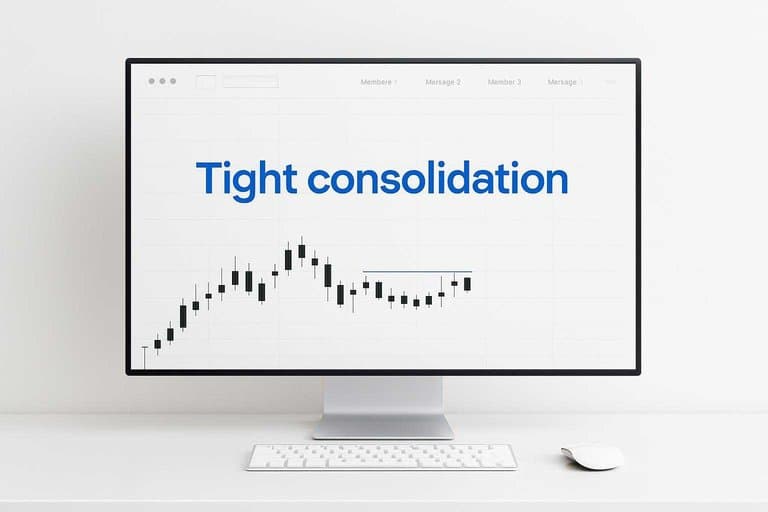
If the chart can’t “prove” it’s coiled, you don’t have a breakout—just a candle.
Entry Triggers
Confirmation is your rule for acting, not a feeling. You’re deciding when a breakout is “real” enough to pay up, without donating slippage. The best trigger gets you in early, but not impulsive.
Quallamaggie entry
Quallamaggie entries lean on tightness before the move, then a clean break as the trigger. You’re watching for a “tight shelf” or volatility contraction, then entering as price pushes through a clear level.
That usually looks like:
- Pre-break tight closes near highs, often after a first leg up
- A trigger above a short-range high, or a key daily level
- Opening range awareness, so you don’t buy the first noisy print
- A preference for entering on the break, not 5% late
The point is to get filled near the inflection, so you’re not buying someone else’s profit.
CAN SLIM entry
CAN SLIM entries key off a pivot buy point from a defined base. Confirmation comes from price clearing that pivot, ideally with strong volume versus normal.
The logic is structured:
- Identify the pivot from the base pattern
- Buy as price clears the pivot, not below it
- Require volume confirmation, the classic “volume surge” look
- Allow an “acceptable buy range,” typically up to 5% above pivot
That 5% band is permission to pay up, as long as the breakout is behaving.
Winner: timing
Real breakouts move fast, so your trigger needs speed without chaos.
- Enters closer to the inflection point
- Uses tightness as early confirmation
- Reduces slippage from late “volume proof”
- Lowers risk of missing the first surge
Quallamaggie wins on timing because it treats confirmation as pre-break structure, not post-break validation.
Risk Management
Both Quallamaggie and CAN SLIM make their money on breakouts, but they survive on exits. Your stop, your size, and your add-ons decide whether a bad week is a paper cut or a career event.
Stop placement
Quallamaggie leans on tight, technical invalidation stops, like “back below the breakout level” or a key moving average. CAN SLIM usually uses pivot-based exits with the classic 7–8% stop from the buy point.
Tight technical stops: less capital at risk, faster feedback, more whipsaws in choppy bases. Pivot/7–8% stops: fewer shakeouts, bigger average loss, and more room for gap-down pain.
If you’re getting tagged out three times in a row, your market isn’t trending—it’s chopping.
Sizing rules
Your sizing rules should match your stop distance, not your confidence. Breakout traders usually blow up by sizing “normal” with a wider stop, or pyramiding before they’re paid.
- Risk per trade: size from dollars at risk
- Volatility/ATR: size from average range
- Add-ons: pyramid only after follow-through
- Exposure limits: cap total and sector risk
- Liquidity checks: avoid thin breakouts
If your stop gets wider, your size must get smaller. Non-negotiable.
Winner: drawdowns
Quallamaggie is the safer framework for breakout traders when you care about drawdowns first. Tighter invalidation stops plus risk-per-trade sizing cuts loss size and shortens losing streaks, even if it increases small whipsaws.
CAN SLIM can work, but the 7–8% style stop often creates fewer losses that are much larger. In fast breakouts, that’s where drawdowns quietly compound.
Pick the method that keeps you in the game, because the next clean trend is always coming.
Exits and Adds
Both Quallamaggie and CAN SLIM can find breakouts, but exits decide if you keep the money. Your adds decide if a good trade becomes a great one, or a blown-up one. Think “protect first, then press,” like the quote, “Sell too soon and you work for commissions.”
Profit taking
You need exits that lock gains while leaving room for a leader to trend. Otherwise you round-trip the best part of the move.
- Trail below key moving average
- Sell on climactic volume spike
- Exit on breakout failure day
- Take partial into extended strength
- Tighten stop after big gap
Your best exit is usually the one that keeps you in until the stock breaks character.
Pyramiding
Quallamaggie presses harder, sooner, and more systematically than CAN SLIM. You add after confirmation pushes, keep adds spaced by clean price progress, then reset your stop so total risk stays capped.
The move you’re betting on is momentum, not your original entry.
Winner: upside capture
Here’s the practical difference when a leader trends for weeks.
| Dimension | Quallamaggie | CAN SLIM | Edge |
|---|---|---|---|
| Add-on cadence | Aggressive, frequent | Selective, fewer | Quallamaggie |
| Exit style | Trend-first trailing | Strength-based selling | Quallamaggie |
| Round-trip risk | Lower with trails | Higher if late sells | Quallamaggie |
| Best fit | Fast momentum leaders | Fundamental-backed leaders | Quallamaggie |
If you want maximum upside capture, choose the system that keeps you in by default, not out by rules.
Tools and Workflow
Both Quallamaggie and CAN SLIM can catch breakouts, but they demand different “daily chores.” One leans on clean price/volume execution; the other adds a fundamentals and earnings layer. Your choice is mostly about time, tooling, and how many moving parts you can run without slipping.
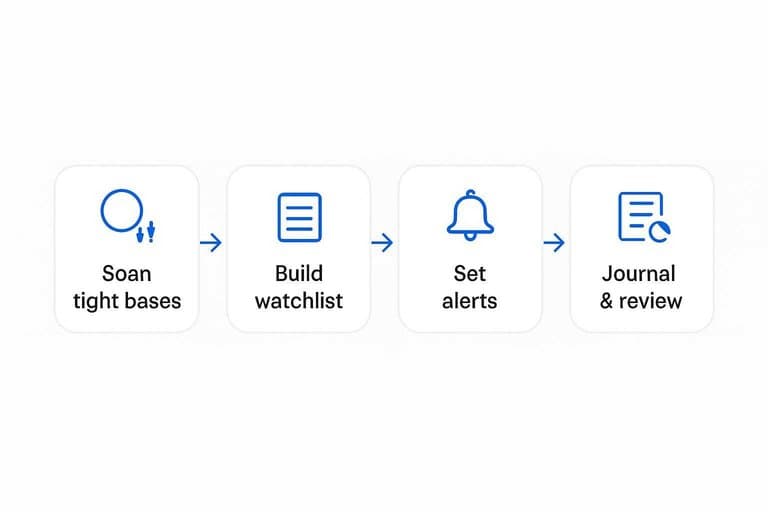
Daily routine
You’re not choosing a philosophy. You’re choosing a schedule.
- Scan for tight bases and strong recent runners; filter by liquidity.
- Build a watchlist with trigger prices, invalidation, and position sizing.
- Set alerts at pivot and add-on levels; avoid “watching” every tick.
- Journal entries and exits with screenshots; note what you ignored.
- Review weekly for pattern quality and rule breaks; adjust filters.
If you can’t repeat this when you’re busy, the strategy isn’t the problem.
Data needs
Your data stack decides what’s possible before you even place a trade.
- Price/volume history with intraday or daily bars.
- Relative strength metrics and trend filters.
- Screener for breakouts, tightness, and volume expansion.
- Earnings calendar and event alerts.
- Fundamental fields: sales, EPS, margins, guidance.
The extra edge often comes from one more dataset, and one more failure point.
Winner: practicality
Quallamaggie-style breakout trading is easier to execute consistently for most traders. You can run it with one charting platform, a solid screener, alerts, and a strict journaling habit. CAN SLIM adds ongoing fundamental upkeep and earnings timing decisions, which increases cognitive load and “oops” risk when life gets busy.
Common Failure Modes
Both Quallamaggie and CAN SLIM can work, then suddenly stop working when you push them past their guardrails. Most losses come from trader behavior, not the headline rules, like “I’ll just take one more breakout.”
Quallamaggie pitfalls
Quallamaggie is fast, pattern-driven, and action-heavy, so your mistakes compound quickly. The edge disappears when you turn “aggressive” into “reckless.”
- Overtrading every near-breakout
- Chasing extended moves past clean entries
- Trading illiquid, gappy small caps
- Setting stops too tight for volatility
- Overpyramiding before trend proves
Your main enemy is speed: you can dig a hole in one afternoon.
CAN SLIM pitfalls
CAN SLIM looks structured, but it’s easy to drift into slow, opinionated entries. The method breaks when you treat fundamentals as permission to ignore price.
- Buying late after obvious breakouts
- Ignoring market trend and breadth
- Relying on lagging fundamental signals
- Forcing bases that aren’t bases
- Holding through distribution and churn
The failure mode is denial: you keep “being right” while price bleeds.
Winner: robustness
For pure breakouts, Quallamaggie is more forgiving because it’s tighter to price and faster to invalidate. Bad entries usually fail fast, and your stop tells you quickly.
CAN SLIM is robust at idea selection, but less forgiving at the breakout moment when “great company” becomes a crutch. Errors can take weeks to reveal, which invites rationalization and oversized losses.
Cost and Time
You can learn both without paying for a “system.” You still pay in screen time, mistakes, and missed moves.
| Dimension | Quallamaggie (QM) breakouts | CAN SLIM breakouts | Who’s faster |
|---|---|---|---|
| Learning curve | Pattern + risk reps | Fundamentals + pattern | QM |
| Time-to-competent | Weeks to months | Months to a year | QM |
| Research workload | Charts, scans, journaling | Earnings, sales, groups | QM |
| Opportunity cost | Faster live feedback | Slower feedback loop | QM |
| Typical spend | Scanner + data | Data + news tools | Tie |
If you want speed, pick QM and grind execution; CAN SLIM rewards patience, but costs more calendar time.
Pick your breakout playbook—and commit for 20 trades
- Choose the framework that matches your edge: Quallamaggie if you prefer tighter, price/volume-led momentum with aggressive adds; CAN SLIM if you want fundamentals-backed leaders with more structured base rules.
- Define your non-negotiables before you trade (market regime filter, setup checklist, entry trigger, initial stop, max daily/weekly loss).
- Paper trade or trade small for 20 breakouts using one rule set only, then review: entry quality, stop discipline, drawdown size, and whether your winners were allowed to expand.
- Only then optimize one variable at a time (tighten/loosen stops, add rules, profit-taking) so you improve the system instead of constantly switching it.
Frequently Asked Questions
Is qullamaggie trading basically the same as momentum breakout trading?
Yes—qullamaggie is a momentum breakout style focused on buying strength after a stock proves demand with new highs and clean price action. The difference is the specific pattern preferences (tight consolidations, volume/volatility cues) and a rules-driven approach to risk and adds.
Do I need Level 2, time-and-sales, or intraday charts to trade the qullamaggie breakout method?
Usually no. Most qullamaggie-style breakouts can be executed with daily charts plus basic volume, ATR, and relative strength data; intraday tools mainly help fine-tune entries and reduce slippage, not find the setups.
How do I scan for qullamaggie breakouts without paying for expensive software?
Start with free/low-cost screeners (TradingView, Finviz Elite, MarketSmith alternatives) filtering for 52-week highs, strong relative strength, rising volume, and tight ranges. Then manually review charts for clean bases and liquidity (often $10M+ average daily dollar volume).
What kind of win rate and expectancy should I expect with a qullamaggie breakout approach?
Most breakout systems win less than 50% of the time, and the edge comes from keeping losses small (often ~1R) while letting a few winners run to 3R–10R+. Track results in R-multiples and aim for positive expectancy (average R per trade above 0) over 50–100 trades.
How long does it take to get consistent with the qullamaggie method for breakouts?
Most traders see meaningful consistency after 3–6 months of focused execution and journaling, with a full “feel” for setups taking closer to 6–12 months. Consistency improves fastest when you trade small size, review every trade weekly, and standardize your playbook.
Find Breakout Leaders Faster
Quallamaggie-style breakouts live and die by clean leadership and market regime context—and doing that scan manually every day is a grind.
Open Swing Trading speeds up stock selection with daily RS rankings, breadth, and sector/theme rotation tools so you can focus on your own entries and risk rules—get 7-day free access with no credit card.
Sources
- An Nvidia Shakeout, And The Reason For The 5% Buy Zone (Investors.com / IBD) — referenced in CAN SLIM entry