
Stocks by Industry: A Beginner’s Way to Group
A beginner-friendly explainer for grouping stocks by industry—define “industry,” use a shared business-model mental model (revenue, costs, risks), choose a practical classification framework and granularity, and apply it with an industry snapshot table and step-by-step grouping process.
Stocks by Industry: A Beginner’s Way to Group
A beginner-friendly explainer for grouping stocks by industry—define “industry,” use a shared business-model mental model (revenue, costs, risks), choose a practical classification framework and granularity, and apply it with an industry snapshot table and step-by-step grouping process.
Ever compare two “tech” stocks and wonder why one moves with interest rates while the other tracks consumer spending? The label you use—industry, sector, or theme—quietly shapes how you judge risk, value, and diversification.
This explainer gives you a simple way to group any stock without getting lost in jargon. You’ll learn what “industry” really means, when grouping clarifies (and when it misleads), a core mental model based on revenue/costs/risks, and a straightforward process you can repeat for any company.
Industry As A Map
Industries are neighborhoods. They help you compare similar businesses, instead of mixing everything into one noisy pile.
Think of it like shopping. You don’t compare a grocery store to a jet engine maker.
What “industry” means
“Sector” is the big bucket. “Industry” is the smaller bucket inside it. “Sub-industry” is the most specific label.
Example: Technology sector → Software industry → Application software sub-industry. The point is simple. Group companies by similar revenue drivers.
Why grouping helps
Grouping stocks by industry clears three beginner problems fast.
- Reduces the overwhelm of endless tickers
- Prevents apples-to-oranges “cheap vs expensive” mistakes
- Exposes hidden concentration in one theme
If most of your winners live in one bucket, you’re not diversified. You’re just lucky.
When it misleads
Industry labels can lag reality. That’s where beginners get tricked.
First trap: one company spans multiple industries, like Amazon selling retail, ads, and cloud. Second trap: fast pivots, like a hardware firm becoming a services business. Old labels break.
The Core Mental Model
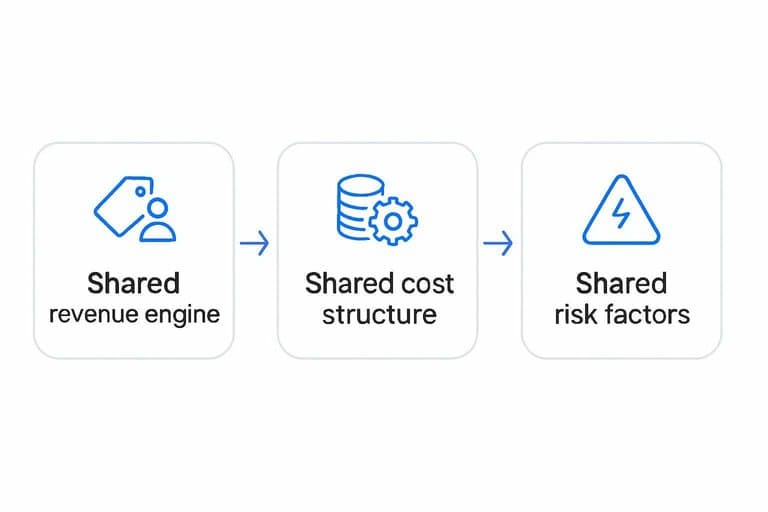
Industries are a shortcut for understanding shared economics. Companies in the same industry often make money the same way, pay for the same inputs, and flinch at the same shocks. Think “airlines vs. software”: both sell, but their economics barely rhyme.
Shared revenue engine
Revenue patterns rhyme inside an industry because the buyers and the pricing rules are similar. Demand often moves together too, like “ad budgets tighten” hitting many media businesses at once.
Look for the same customer type, the same switching costs, and the same cycle timing. If most peers live on renewals, or all depend on holiday traffic, their top lines will tend to sync.
If the revenue engine matches, you can often predict who wins by who has the better edge.
Using a consistent classification framework like the GICS hierarchy can help you define what “same industry” means before you compare revenue engines across peers.
Shared cost structure
Costs cluster by industry, so you can compare companies on the same scoreboard. Scan for the few inputs that dominate margins.
- Labor-heavy operations and wage sensitivity
- Commodity inputs and pass-through ability
- Logistics costs and fuel exposure
- R&D spend and product cycles
- Compliance burden and capital intensity
Find the biggest cost line first. That’s usually where the real moat, or fragility, lives.
Shared risk factors
Industry grouping matters because shocks don’t land evenly. Higher rates can punish capital-intensive models, while consumer slowdowns hit discretionary categories first.
Oil spikes can crush airlines and help some energy producers. Policy shifts can rewrite healthcare profits overnight, while barely touching a restaurant chain.
If you know the shared risks, you stop mistaking a macro wave for company skill.
A Simple Classification System
Start with one framework and stick to it. Think of it like using the same map legend every time you invest.
Use a standard frame
GICS and ICB are shared dictionaries for stock labels. They keep you from inventing your own categories like “tech-ish” or “consumer vibes.”
Pick one, use it everywhere, and only change it when you have a clear reason. Consistency beats perfection when you want comparisons that hold up.
That’s how you turn “I feel like” into “I can verify.”
Pick your granularity
Choose one level based on what you’re trying to learn. More detail helps, but it also adds noise.
- Sector: broad themes and basics
- Industry: apples-to-apples comparisons
- Sub-industry: closest direct peers
Go deeper only when you’re making a tighter decision.
Handle mixed businesses
Some companies don’t fit cleanly in one box. Your goal is a useful label, not a perfect biography.
Classify a company by its primary revenue or profit driver. If it’s a conglomerate, anchor on the biggest cash engine and note the rest.
Platform businesses are the tricky ones. When they span multiple industries, pick the segment that explains the stock’s outcomes.
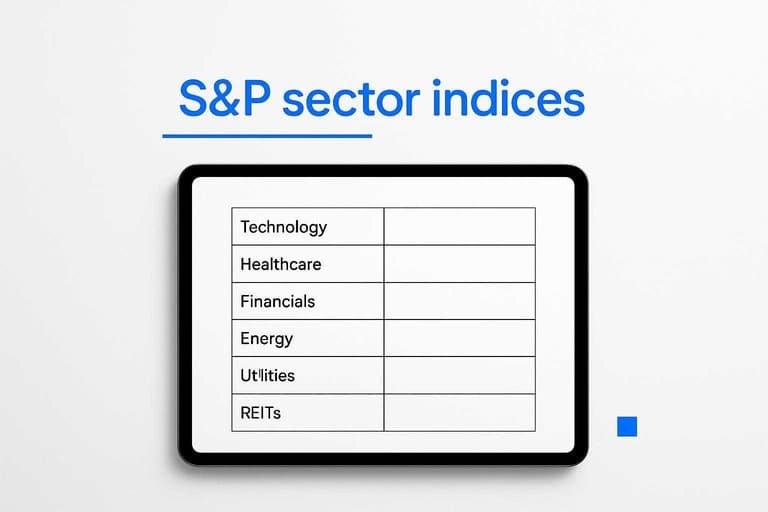
Industry Snapshots Table
Use this as a quick map before you buy a stock, because industries tend to fail in familiar ways.
| Industry | Typical products | Main revenue driver | Key cost | Top risk (beginner) |
|---|---|---|---|---|
| Technology | Software, chips | User growth | R&D spend | Fast obsolescence |
| Healthcare | Drugs, devices | Approvals, pricing | Trials | Regulation surprises |
| Financials | Banking, insurance | Net interest margin | Credit losses | Recession defaults |
| Consumer Staples | Food, household | Volume stability | Commodities | Margin squeeze |
| Consumer Discretionary | Retail, travel | Consumer confidence | Inventory | Demand whiplash |
| Energy | Oil, gas | Commodity prices | Capex | Price collapse |
| Industrials | Machines, transport | Order backlog | Labor | Cycle downturn |
| Utilities | Power, water | Regulated rates | Maintenance | Rate rulings |
| Real Estate (REITs) | Offices, apartments | Occupancy, rent | Interest expense | Refinancing risk |
If you want the standard taxonomy behind these buckets, see how S&P sector and industry indices are defined using GICS.
When your thesis ignores the “top risk” column, you’re usually betting on luck.
How To Group A Stock
Start with the company’s own words, then verify with what it sells and who buys it. Your goal is one label you can defend and a peer set that behaves similarly.
- Pull the latest 10‑K, investor deck, and earnings transcript.
- Write the revenue drivers in one line, like “cloud security subscriptions.”
- Check segment reporting and percent of revenue by segment.
- Find three peers using the same customer and budget line.
- Sanity-check valuation and margins against those peers for fit.
If the numbers don’t rhyme, your “industry” label is probably marketing, not economics.
Put the Industry Lens to Work on Your Next Stock
Treat “industry” as a map, not the territory: it’s most useful when it predicts how a business makes money, what it spends to operate, and what can break its results. Use a standard classification as your starting point, then adjust the granularity until the peers share the same revenue engine, cost structure, and key risks. When a company is clearly mixed, group it by the dominant profit driver and keep a note of the secondary exposure so you don’t get surprised later.
Frequently Asked Questions
Are "stocks by industry" the same as sector investing?
Not exactly. Sectors are broader buckets (like Technology), while industries are more specific groups inside a sector (like Semiconductors), so industry grouping usually gives cleaner peer comparisons.
Do I need to use GICS, ICB, or NAICS to group stocks by industry?
No—most beginners can rely on the industry label shown in a brokerage app, Yahoo Finance, or the company’s investor relations profile. The key is consistency: use one system so your comparisons stay apples-to-apples.
How do I tell if a stock is misclassified by industry?
Check the company’s latest annual report and investor presentation to confirm its primary revenue source and main competitors. If most revenue comes from a different business line than its label suggests, treat it as a different industry for analysis.
What should I expect to move together when I group stocks by industry?
Industry peers often react similarly to the same drivers—input costs, regulation, demand cycles, and interest rates—so price moves and earnings surprises can cluster. You’ll usually see higher correlation within an industry than across unrelated industries.
How often should I revisit a company’s industry classification?
Review it at least quarterly (after earnings) and anytime there’s a major acquisition, divestiture, or strategy shift. A practical rule is to reclassify when a new segment becomes the largest revenue or profit contributor.
Turn Industry Grouping Into Trades
Grouping stocks by industry is a great map, but acting on it consistently requires fresh relative strength, breadth, and rotation context every day.
Open Swing Trading surfaces potential breakout leaders with daily RS rankings, market breadth, and sector/industry views—so you can build tighter watchlists in minutes. Get 7-day free access with no credit card.
Sources
- Global Industry Classification Standard (GICS®) Methodology (MSCI) — Feb 20, 2025 PDF — referenced in Shared revenue engine
- S&P Sectors & Industry Indices (S&P Dow Jones Indices) — referenced in Industry Snapshots Table