What “Better Stock” Means for Breakout Swing Traders
An explainer on what “better stock” means for breakout swing trading—why liquidity, structured volatility, crowded reference levels, and clean price action matter more than being a “good company.”
What “Better Stock” Means for Breakout Swing Traders
An explainer on what “better stock” means for breakout swing trading—why liquidity, structured volatility, crowded reference levels, and clean price action matter more than being a “good company.”
You can have the perfect breakout setup and still get chopped to pieces if the stock itself is the problem. Tight patterns fail, spreads widen, and your stop gets tagged by noise—then the move happens without you.
“Better stock” isn’t a compliment to management or fundamentals; it’s a trading edge. This explainer shows you what to look for before you ever draw a line: the liquidity that lets you execute, volatility that expands with structure, the crowded levels that create follow-through, and the clean price action that keeps risk readable.
Define Better Stock
In breakout swing trading, “better stock” is not a compliment. It’s a mechanical label for names that move cleanly after the trigger.
You want four traits: liquid, volatile enough, orderly, and widely watched. Those traits decide whether a breakout gets follow-through or dies from friction.
Breakout swing context
Breakout swing trading lives in days to weeks, not quarters. Think “Tuesday entry, next Friday exit,” not “hold through earnings season.”
Your edge comes from continuation after the level breaks. Valuation can be “cheap” and still chop you to pieces.
Better vs good company
A trader’s “better” stock behaves well under pressure. An investor’s “better” company compounds cash flow and defends margins.
You’re optimizing for predictable tradability, not moral quality. Great business, terrible chart, easy pass.
Mechanics first lens
Every criterion is really an order-flow filter. You’re asking: will enough participants show up, with low friction, and reinforce the move?
Liquidity reduces slippage. Controlled volatility provides range. Orderliness keeps levels meaningful. Crowd attention creates feedback loops that push price away from the breakout.
Liquidity Is Fuel
Liquidity is what turns a breakout from a lottery ticket into a repeatable trade. Deep liquidity cuts slippage, lets you scale in and out, and keeps the move from being a one-print spike that fades.
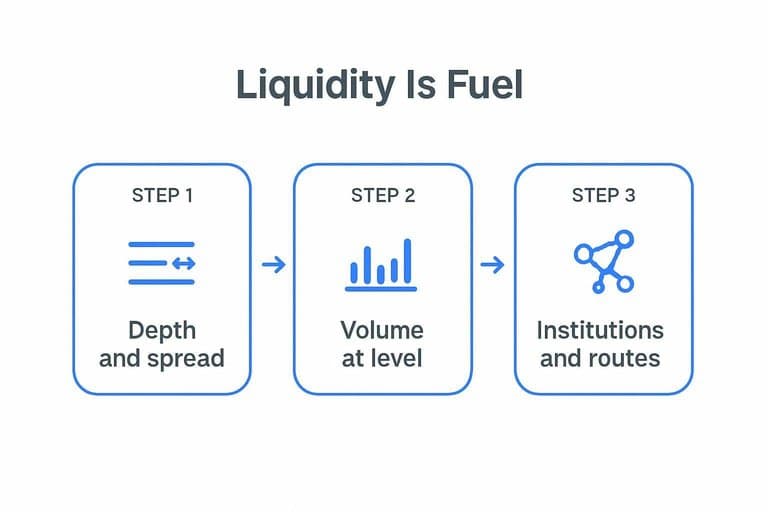
Depth and spread
Tight spreads and a thick order book lower the “toll” you pay to get in and out. When a stock holds a one-cent spread near a key high, your trigger fires clean and your stop behaves like a stop.
A simple read: if the spread widens right at the breakout line, the market is warning you. If the inside stays tight and size keeps refreshing, you’re trading a level, not a vacuum.
Good liquidity makes your breakout rules matter again.
Volume at level
Volume clustered near prior highs is evidence of two-sided business, not just chasing. That matters because breakouts often need absorption before they can continue.
Look for heavy prints and steady turnover within a small range around the old high. Buyers hit offers, sellers lean on the level, and the tape stays active without price collapsing.
That “fight at the line” is often the precondition for a clean push through.
Institutions and routes
Institutions and algos don’t trade in one place, and that’s a feature. Multiple venues and smart routing keep quotes continuous, even when the stock is moving fast.
In liquid names, you’ll see steady updates, repeated fills, and less random air pockets. In thin names, one order can clear the book, create a gap, and turn your breakout entry into a bad fill.
If the quotes aren’t continuous, your “setup” is just a headline risk with a chart. (For context on how routing and venue competition work in U.S. equities, see the SEC’s overview of Regulation NMS.)
Volatility With Structure
You want volatility that moves cleanly, not volatility that flips a coin. A “better stock” swings inside understandable boundaries, like a two-week box between $48 and $52, then breaks with intent.
Structure gives you reference points where other traders already placed orders. That order density is what turns a breakout from a story into a fill-and-go move.
Range creates memory
A range isn’t dead money; it’s the market writing down levels that matter. Each clean tap of support or resistance leaves more resting orders behind, like traders defending “$50” over and over.
Repeated touches do three things:
- They anchor stop orders just outside the range.
- They stack limit orders at the edges.
- They attract breakout entries above or below.
That’s why a break of a well-tested level often runs farther than a break of a one-off spike. You’re trading stored positioning, not a random print.
ATR vs noise
ATR can expand in a tradable way, or it can expand because price is chaotic. You care because it changes where your stop can live and whether follow-through is likely.
ATR vs noise (reference table)
Use this to separate “room to run” from “room to get clipped.”
| Trait | Steady ATR expansion | Noise-driven volatility | Trading impact |
|---|---|---|---|
| Candle bodies | Larger, consistent | Small, mixed | Stops stay logical |
| Wicks | Shorter | Long, frequent | Stops get hunted |
| Gaps | Rare | Common | Entries get distorted |
| Breakouts | Retest then go | Pop then fade | Follow-through drops |
When volatility is noisy, your stop isn’t “tight.” It’s just exposed.
Compression then expansion
Compression is volatility getting squeezed into a smaller and smaller space. Think of a coil: tighter ranges concentrate orders, and the next expansion has something to push against.
The best breakouts often look boring right before they work, with smaller candles and clean closes. When expansion follows that compression, you’re not guessing direction as much as timing.
Wait for the expansion to prove itself, then lean on the compression level for risk.
Crowded Eyes Matter
A breakout works best when lots of traders watch the same chart. When signals sync up, price movement stops being “random” and starts being forced.
Shared reference levels
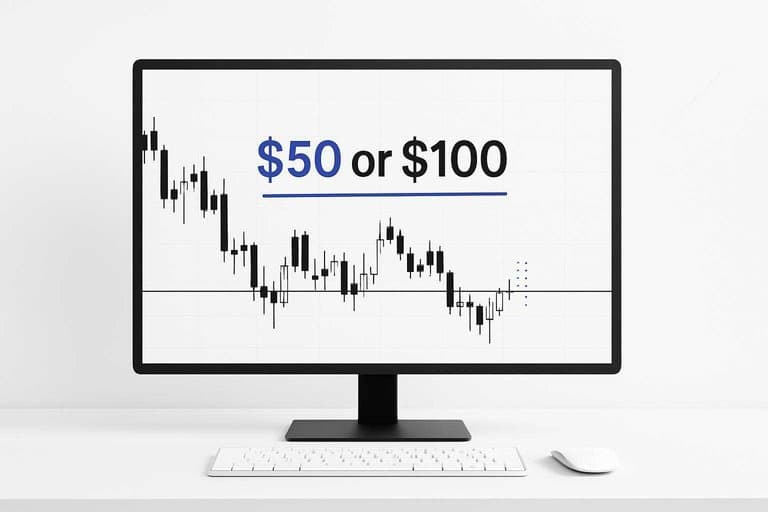
Obvious levels attract orders because they simplify decisions under pressure. Think prior highs, clean bases, and round numbers like “$50” or “$100.”
When enough eyes mark the same line, resting orders stack there:
- Buy stops sit above the high
- Sell stops sit below the base
- Limit sells wait at “the breakout”
- Short entries lean on the level
That cluster turns a simple tick into a trigger, because one break releases a wave of automated and discretionary buying.
Catalysts and narratives
Catalysts compress time because everyone needs to act at once. Earnings, guidance, FDA updates, and “raised outlook” headlines pull in fresh attention fast.
The mechanism is simple:
- News draws new participants
- Spreads tighten as volume rises
- Market makers reprice faster
- Volatility regime shifts upward
More liquidity lets big orders hit without stalling, and more volatility pushes price away from the level before dip-buyers can fade it. Research connecting attention surges to market reactions around earnings can be found in this study on online search activity and earnings.
Positioning feedback loop
After the break, positioning becomes the fuel, not the chart pattern. The move keeps going because people who must buy are now late.
You usually see three forced buyers show up:
- Chasers paying up to “get in”
- Shorts covering into strength
- Underweight managers buying to reduce tracking error
That mix can create multi-day follow-through, because each up day increases the pain of staying out.
Clean Price Action
Clean setups look obvious because price is doing one job. You want a chart where the trigger level feels like a “line in the sand.”
- Tight daily closes near highs
- Few overlapping candles in the base
- Clear horizontal pivot, not diagonal
- Single, clean gap reference level
- Volume dries up before breakout
If you need a ruler and a narrative, skip it and wait for cleaner stock.
Filter for “Better Stock” Before You Hunt the Breakout
For breakout swing trades, a “better stock” is one that trades like a venue built for momentum: liquid enough to enter and exit cleanly, volatile enough to move but structured enough to respect levels. It attracts crowded attention around shared reference points, so breakouts have fuel and follow-through instead of one-off spikes. Start your process by screening the stock first (liquidity, structured range, visible participation), then apply your pattern—because mechanics beat “great company” stories when you’re timing breakouts.
Frequently Asked Questions
Does “better stock” mean the company has better fundamentals for breakout swing trading?
Usually no—“better stock” in breakout swing trading refers to tradability (liquidity, orderly price action, clean levels), not whether the business is “better.” Fundamentals can be a catalyst, but the breakout quality is mainly driven by how the stock trades.
How do I quickly find better stock candidates for breakout swing trades?
Use a stock screener for liquidity (e.g., average volume and tight spreads) plus a price/volatility filter (e.g., ATR% or 20-day range), then scan charts for clean consolidation near key levels. Tools like TradingView, Finviz, or Thinkorswim can surface candidates in minutes.
What volume should I look for in a better stock for breakouts?
Most breakout swing traders start with at least ~1M shares/day average volume (or $20M–$50M+ average daily dollar volume) to keep spreads and slippage manageable. For higher-priced names, dollar volume is the more reliable filter.
Is a better stock always a large-cap, or can small-caps qualify too?
Small-caps can qualify if they have consistent liquidity and orderly ranges, but many fail the “better stock” test because spreads widen and moves get erratic. In practice, the most reliable breakout swings often come from mid/large-caps and liquid ETFs.
How long should I track a stock before deciding it’s a better stock for my breakouts?
Track it for 2–4 weeks of daily action (or 10–20 sessions) to see if it respects levels, holds ranges cleanly, and maintains stable liquidity. One or two clean breakouts aren’t enough—consistency across multiple setups is the signal.
Find Better Breakout Leaders
Defining “better stock” is the easy part—tracking liquidity, structured volatility, crowded attention, and clean price action across thousands of names every day isn’t.
Open Swing Trading surfaces potential breakout leaders with daily RS rankings, breadth, and sector/theme rotation context—so you can shortlist faster with your own setups; get 7-day free access with no credit card.
Sources
- SEC.gov — Regulation NMS overview page (Release No. 34-49408) — referenced in Institutions and routes
- MDPI Journal of Financial Studies — Online Search Activity and Market Reaction to Earnings Announcements (Google search volume as attention proxy) — referenced in Catalysts and narratives